
CONGRATULATIONS SPONSOR KURITA WATER AND ENVIRONMENT FOUNDATION (KWEF) I
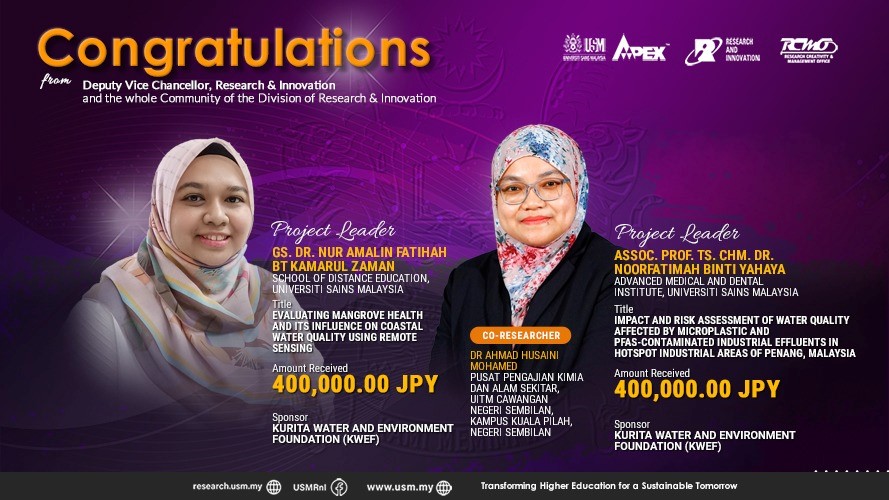 GS. DR. NUR AMALIN FATIHAH BT KAMARUL ZAMAN
Mangrove ecosystems are vital for coastal protection, biodiversity conservation, and sustaining the livelihoods of local communities. Although they cover less than 0.4% of the world’s forests, their ecological and socioeconomic roles are disproportionately significant. However, mangroves are increasingly threatened by both natural processes and anthropogenic pressures, particularly in intertidal zones. This study aims to evaluate mangrove health and its influence on coastal water quality using an integrated remote sensing approach along the southern coast of Penang Island, Malaysia. Sentinel-2 imagery will be employed to map the current health status of mangroves, while Sentinel-3 OLCI data will be used to assess coastal water quality indicators such as turbidity and chlorophyll-a concentrations. Through spatial correlation analysis, the research seeks to explore the relationship between mangrove condition and water quality. The findings are expected to enhance understanding of ecological linkages between vegetation health and marine water systems, supporting more informed and effective strategies for mangrove conservation and coastal management in tropical regions.
ASSOC. PROF. TS. CHM.DR. NOORFATIMAH BINTI YAHAYA
The industrial sector is a key contributor to Malaysia’s economic growth, yet it also generates effluents that are increasingly associated with the release of emerging contaminants such as microplastics and per- and polyfluoroalkyl substances (PFAS). These pollutants have raised serious environmental concerns due to their persistence, bioaccumulative nature, and potential adverse effects on aquatic ecosystems and human health. Microplastics, originating from product ingredients or plastic degradation, can harm aquatic organisms physically and act as carriers of toxic compounds. PFAS, widely used for their oil- and water-repellent properties in various industrial and consumer products, have been linked to immune toxicity, endocrine disruption, developmental disorders, and cancer risks. Despite increasing awareness and ongoing research, there remains a pressing need to monitor and assess the extent of contamination, especially in industrial hotspot areas such as Penang, Malaysia. This study aims to evaluate water quality and conduct risk assessment of microplastics and PFAS contamination in selected industrial zones of Penang. Sampling locations will be selected based on pollution history, industrial activity, and accessibility. Water samples will be collected following standardized procedures and analyzed for physicochemical parameters, nutrient levels, turbidity, microplastic content, and PFAS presence. Statistical analyses will be performed to identify trends, correlations, and possible pollution sources. The results will be compiled into a comprehensive report outlining contamination impacts, health and environmental risks, and recommendations for pollution control and regulatory improvements.
- Hits: 212