
TAHNIAH PROFESOR DATO' DR. AILEEN TAN SHAU HWAI, FSAc. TAJAAN UK RESEARCH AND INNOVATION (UKRI)
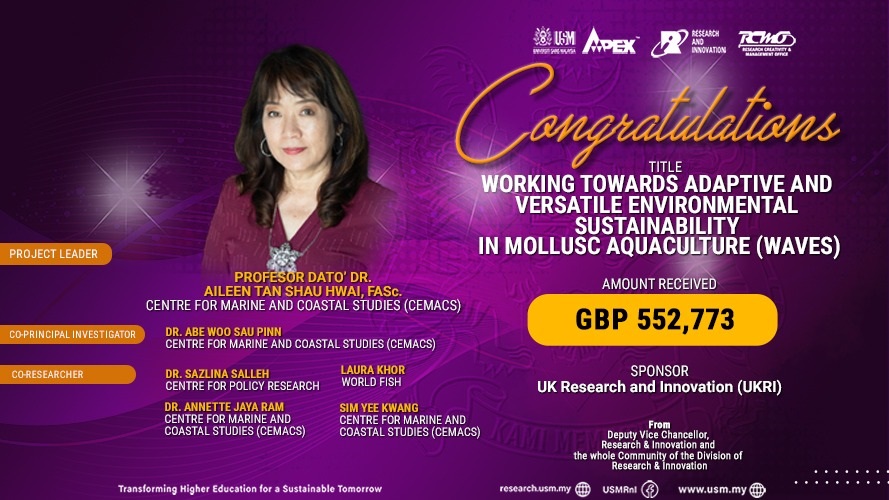 Mollusc aquaculture produces 20 million tonnes (USD 29.8 billion) live biomass annually, supporting both marginal farming communities and export trade. Asia hosts >95% of activity with bivalves dominating production, primarily oysters, mussels, and benthic clams. These non-fed species offer a ‘low-carbon’ solution to high-quality nutritional security and confer environmental benefits for biodiversity and seawater nutrient status. Nevertheless, mollusc output as a proportion of aquatic animal aquaculture declined to 20.3% from 30.2% since 2000, with producers facing challenges from climate change and disease, concerns over algal toxins, food safety and reliable access to high-quality seed, and other societal, cultural and commercial pressures. The WAVES consortium aims to develop capacity in diversified mollusc aquaculture to create system resilience and to promote the sustainability and growth of this sector. To achieve our ambition, four key objectives have been co-developed that place engagement with farming communities and stakeholders at its heart:
i) conduct systems mapping of current mollusc production in Vietnam, Malaysia and Indonesia (clams, mussels and oysters) as models of wider Asia to provide deep understanding for activities, livelihoods and climate change threats;
ii) create a systems dynamic model and develop a scenario tool to forecast plausible futures for mollusc aquaculture;
iii) generate data to support species diversification for climate resilience, to promote hatchery development for reliable supply of high-quality seed, and to produce safe and nutritious food;
iv) iterate and disseminate findings to develop context-sensitive roadmaps for future sustainable expansion of resilient mollusc aquaculture.
The WAVES Consortium seeks to enable the equitable transition of mollusc aquaculture to sustainable systems resilient to the challenges posed by climate change, ensuring optimised use of the natural environment, and with increased output enhancing local food security and nutritional benefit. The project will provide a contextually-relevant fulcrum to stimulate further investment and create a UK-Asia alliance of researchers leading developments in mollusc farming
- Hits: 196